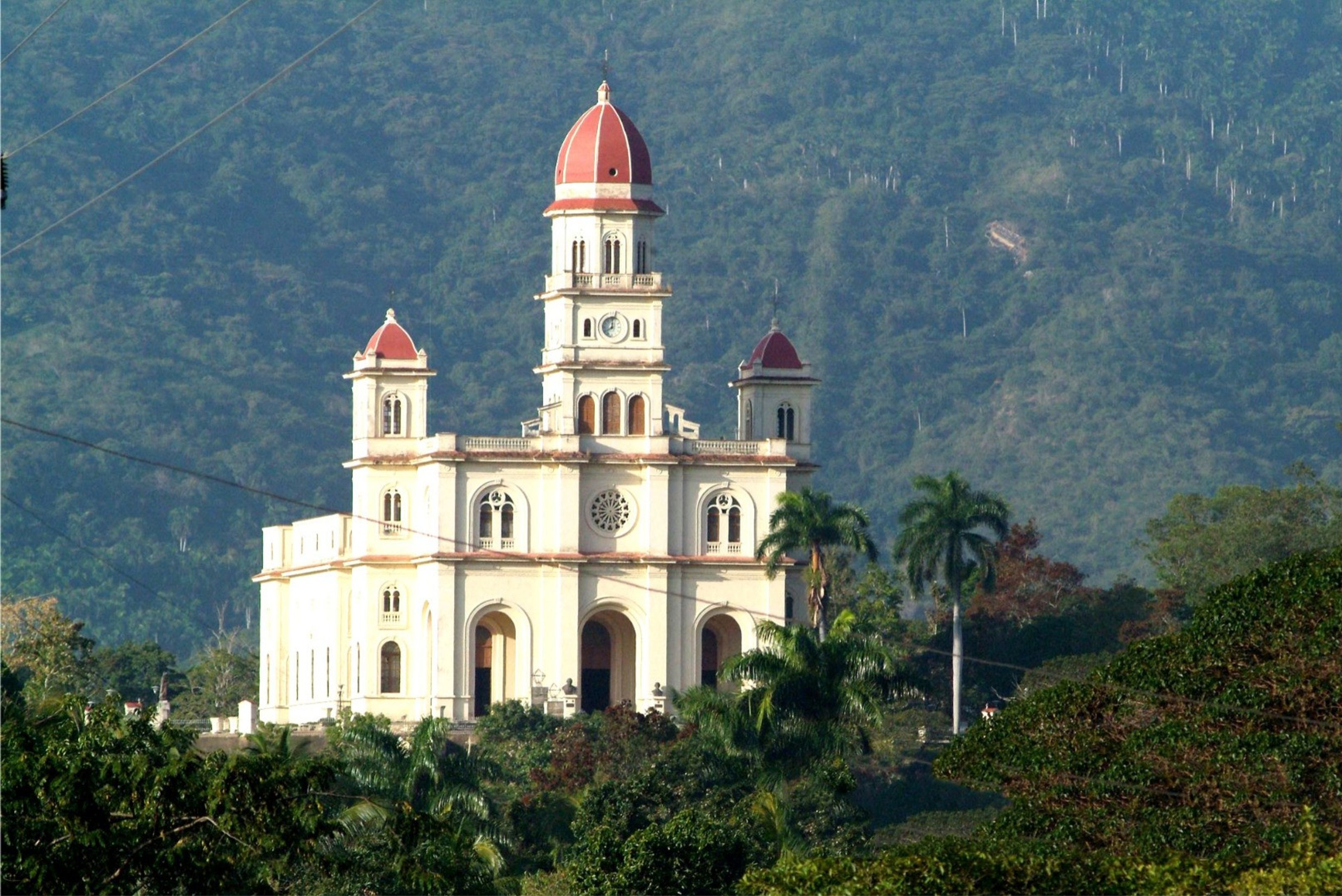
"SANCTUARY OF THE VIRGIN OF CHARITY OF COPPER" (SANTUARIO DEL COBRE) Tour
From Santiago de Cuba
4 hrsGuidedChildren welcome

Half day toursSantiago de Cuba2.00 hrsGuided9:00 hrsPick-up: Marina Marlin Punta Gorda. 1ra., Santiago de Cuba, Cuba. Tel: (+53 22) 69 1446.
Scuba Diving in Wrecks of the Hispanic - Cuban and North American War of 1898. "DESTROYER PLUTON"
Archaeological Park of the Natural and Cultural Underwater Heritage Battle of Santiago de Cuba Declared a National Monument in 2015.
General Description
The "Archaeological Park of the Natural and Cultural Underwater Heritage Battle of Santiago de Cuba" occupies a coastal strip of about 120 kilometers in length and was witness to the unequal combat between the squadrons of the Spanish Rear Admiral Pascual Cervera and the American Rear Admiral William Sampson, in which all the Spanish ships were annihilated ending the Spanish colonial rule in America, and giving way to the emergence of the most powerful empire in the history of mankind, the United States of America. The place is formed by seven archaeological sites (Las Cuatro Bocas Playa Siboney, Rancho Cruz - Buey Cabón, Playa Mar Verde, Ensenada de Juan González, Aserradero and Playa La Mula), whose environmental and archaeological characteristics are different from one site to another along the southeastern coastal strip of the province of Santiago de Cuba.
The vestiges of that naval crusade make up what is currently known as the "Batalla Naval de Santiago de Cuba" Underwater Archaeological Park. In this site lie the wrecks linked to the landing and the naval conflict, as well as all those material evidences belonging to the ships that are related in one way or another to the events, such as: masts, masts, remains of the rigging of the mastheads, ironwork, parts of the artillery sites, thick and medium caliber projectiles, flushes, balusters and mechanisms of the propulsion system.
It is a true privilege to learn about history through these wrecks, exceptional witnesses to the events of the Naval War of 1898, and to enjoy diving today in an environment of spectacular beauty, where the Sierra Maestra mountain range bursts into the Caribbean in an abrupt and irregular manner, cut by canyons and riverbeds and estuaries that extend into deltas covered with pebbles and low areas, forming wetlands covered with mangroves in the shelter of virgin inlets and coves: ecosystems that support incredible biological diversity.
ARCHAEOLOGICAL SITE: "JUAN GONZALEZ COVE" Shipwreck: "Pluto" destroyer.
The shipwreck "Pluto", is very close to the coast, easily identifiable from the shore by the number of fragments that the sea has deposited on the steep edge of the reef, where it would be defeated by enemy fire. The site where it ran aground on July 3, 1898 is an irregular stretch of dogtooth coastline, some 800 meters away, between Rancho Cruz cove to the east and Buey Cabón cove to the west, which opens out onto the southern Caribbean. Its remains are widely dispersed throughout the area that makes up the archaeological site, at a depth of between 2 and 6 meters.
Location: Buey Cabón settlement, west of Santiago de Cuba city.
Historical Background:
The "Plutón" was built, along with its twin brother "Furor", in the Clydebank Engineering & Shipbuilding Co. shipyard in the United Kingdom, on November 4, 1897. Its construction was completed by completing the machinery, armament and war arsenal.
In 1898, during the Cuban-American War, the "Plutón", together with the destroyers "Furor" and "Terror", received the order to be part of the squadron commanded by Vice Admiral Cervera, which would go to Puerto Rico to defend the Spanish colonial rule in the Caribbean. The "Pluto" and the rest of the ships left on April 29 for San Juan, Puerto Rico.
On July 3, 1898, the "Pluto" was the last ship to leave by the mouth of the bay of Santiago de Cuba, with a singular delay that allowed it to be waited for by the American ships, and they received it with a rain of projectiles.
The natural historical scene of the July 3rd disaster and the knowledge of the place where the "Pluto" hit, even the remains of it, scattered over land and sea, make the archaeological site a truly special place.
TECHNICAL CHARACTERISTICS OF THE VESSEL "Plutón":
Diving services included:
Marlin Punta Gorda Diving Center
Approximate duration of the tour (total): 2 hours approximately
Degree of difficulty: Low.
Distance to cover in the tour (round trip): 30 km approximately.
Very important note: It is compulsory for customers to present their official diving certification.
Very important note: For reasons of safety and protection of underwater heritage, customers must never directly touch the wreck and must strictly follow the instructions given by the diving instructors.
Cancellation Policy
From Santiago de Cuba
4 hrsGuidedChildren welcome
From Santiago de Cuba
5 hrs aproxGuidedChildren welcome
$88.00total for Wed, Dec 2, 2026, 2 adults
See 1 optionWed, Dec 2, 2026 · 2 adults · 1 of 1 option available
Tour in diving boat with professional diving instructor service in several languages and 1 dive.